
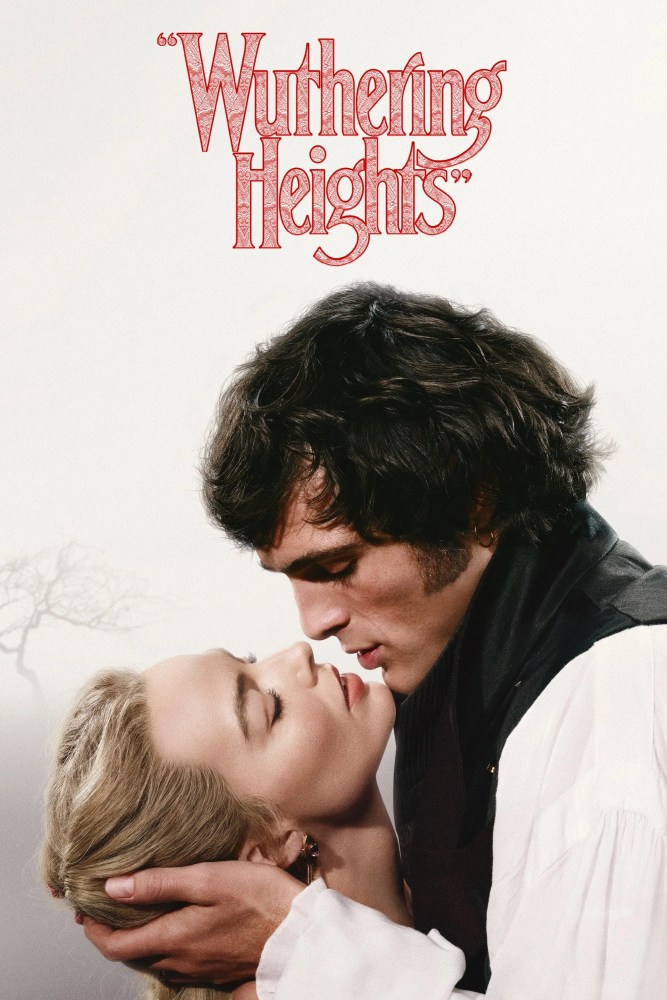

Director: Emerald Fennell
Writer: Emerald Fennell, based on the novel by Emily Brontë
Cast: Margot Robbie, Jacob Elordi, Hong Chau, Shazad Latif, Alison Oliver, Martin Clunes, Ewan Mitchell
Emily Brontë’s 1847 dramatic romance novel has been adapted into plays, operas, television shows, movies, and has inspired songs, music, and numerous other artistic works. It has crossed continents and had its settings, both time and place, and language altered. This has resulted in an apparently never-ending stream of adaptations, many of which tend to stray from the source novel, particularly when it comes to the ages and ethnicities of some characters. Now, Promising Young Woman and Saltburn producer/writer/director Emerald Fennell returns with her third project, another version of Wuthering Heights, though this time with added quotation marks. Is this adaptation one that audiences and book-readers can get on board with, or is it just another that will make you throw your hands up in despair and fall to the ground dramatically and declare that your life is now over?
SPOILER WARNING: there are some spoilers for the story, but they are known from the novel.
In the late 1700s, at the Yorkshire estate of Wuthering Heights, young Cathy Earnshaw (Charlotte Mellington) is brought a young boy as a playmate, or “pet”, by her father Mr. Earnshaw (Clunes). She opts to name the boy Heathcliff (Owen Cooper) after her deceased brother. After many years of companionship, Cathy (Robbie) fights her affections for the destitute Heathcliff (Elordi) in favour of seducing their affluent new neighbour, Edgar Linton (Latif). Heathcliff, feeling slighted, takes his “revenge” on Cathy by stealing away from Wuthering Heights for a few years until he becomes a rich man and a better suitor for Cathy, whom he plans to torment for making the wrong decision and in spite of his overwhelming love and lust for her.
Fennell has repeatedly explained her use of quotation marks in the title, which essentially amount to a reminder that this film is her own vision of the story as she first read it many years ago rather than a direct adaptation of the book. It was a clever thing to do to try and avoid certain comparisons, namely that of Heathcliff’s ethnicity and the racism it inspires within the book, a reorganisation of some characters and their ages and back stories, and the omittance of the second half of Brontë’s novel. Instead, Fennell firmly chose to focus on Cathy and Heathcliff’s relationship, as most adaptations of Wuthering Heights tend to do, but in doing so she chose to really go to town on the fatal levels of toxicity within their infamous relationship. The dysfunctional romance is amplified with just about everything else toned down in order for the relationship to take over and seep into almost every aspect of this version of the story. It may not be an entirely new angle, but the depths in which Fennell takes the audience is; much like a real stormy romance, it both frightens and encapsulates. Fennell’s Cathy and Heathcliff are a car crash that we cannot tear our eyes away from.
The sets, production design and costumes did not escape the hurricane of Cathy and Heathcliff. Of course, the moors themselves play their part, as they do within the novel and general adaptations, but the designs of Wuthering Heights and Thrushcross Grange are quite different from expectations and each other. Each represents its inhabitants and sets the tone well depending on the scene. The way in which the wind continually gusts through the Heights is quite on the nose but does its job as a reminder of both the dark and blustery Yorkshire Moors setting and the chaotic household that it is; the presence of an abusive Mr. Earnshaw, an unreliable Nelly (who is younger and also plays companion to Cathy here) and the quiet yet fiery Heathcliff causes all kinds of havoc and their effect on Cathy from childhood to adulthood likely plays a big part in who she becomes. Even at Thrushcross Grange she cannot escape the feelings of others towards her, with Edgar’s love – or, another version of obsession quite different to Heathcliff’s – plastered all over the walls and furniture of the house, and Isabella’s (who is just a ward of Edgar’s here rather than his sister) desperate need for affection and a female companion, her idolisation of Cathy driving a change in Cathy’s way of dressing and presenting herself. Cathy’s clothes are representative of both her societal positions and state of mind, as well as how she wants to be perceived depending on whose presence she’s in. They seem to simultaneously expose her and hide her, with the use of red in particular being quite a hypocritical colour for her, being symbolic of both anger/resentment and romance/love. After wearing dark or dulled colours during her time at Wuthering Heights, a scene in which she enters the Heights wearing the bright colours of Thrushcross Grange pushes the stark contrast between the two aspects and chapters of her life.
With regards to the casting, I do agree better efforts should have been made to find a Heathcliff that was more representative of Brontë’s description, even though that description itself is quite ambiguous and appears to change at times, however that could also have meant not casting Hong Chau as Nelly and Shazad Latif as Edgar, as that would fall in line with many peoples’ apparent need to have an ethnically accurate film. Not having Chau and Latif would have done a disservice to the film, as they put in great performances. It would have been entirely possible to have Chau and Latif plus a man of colour to play Heathcliff, but then you would probably still get people complaining that Fennell has strayed too far from the novel. Ultimately, you cannot please everyone, and I have no doubt we will get more adaptations in the future that will adhere more closely to the novel. My own grievance is the lack of versions that include the second half of the novel. I would like to see Heathcliff’s madness and grief at and after the death of Cathy, as well as a Kate Bush-style ghost haunting him.
Margot Robbie and Jacob Elordi may have been too old to play these characters if it were a direct adaptation, but as it stands for Fennell’s version, they were superb casting choices, each possessing the range to evoke the volatile emotions of Cathy and Heathcliff and take everything to an extreme. Their chemistry was, for lack of a better word, hot, and I both despised and loved their portrayals as much as I despise and love their literary counterparts. Elordi did a decent job of replicating Owen Cooper’s (young Heathcliff, also an excellent performance) Warrington accent, and his Heathcliff was both menacing yet enticing, someone to be avoided yet who is unavoidably magnetic, consuming just about every scene he was in. Robbie also had a good standard English accent for the film, and her Cathy was at once annoying in her spoilt behaviour yet shamefully relatable in her feelings toward others, not only Heathcliff, her presence a complete contrast to Heathcliff and yet feeling like a completed puzzle when together with him. Drape this relationship and the performances with an incredible soundtrack and poignant songs from Charli xcx that come across as inner monologuing from the lovers, and you might start to think there are actually three in the relationship. As previously mentioned, Chau and Latif also give great performances and do a superb job of holding their own when joined by Robbie and/or Elordi in their scenes. Martin Clunes owns the screen with his presence as a more deplorable Mr. Earnshaw than we’re perhaps used to seeing, and Alison Oliver’s Isabella is also quite unlike other versions, with her desperation first for Cathy, then for Heathcliff, and her descent into a pawn used in their games allowing for Oliver to shine as a unique character that represents the audience’s view in some respects.
If Fennell had decided to make a close adaptation of Wuthering Heights, this film would have fallen flat on its face. But if you’re familiar with her work and can understand the use of quotations in the title, then I think this can be far easier to digest as a version distinct from its source. There were times when it walked the line and nearly fell into ‘wtf’ territory, but Fennell was able to pull it back and get back to the narrative at hand. If you are a staunch fan of Brontë’s novel, you might not get onboard as easily with this version, but if you are feeling more open-minded, there is a lot to take away from it, far more than just the insanity of Cathy and Heathcliff that we’ve come to know over the past near-180 years and the POV that usually comes from Nelly. It’s a breath of turbulent, gusty air amongst the various adaptations and remakes of the story, but I too will still lobby for a more faithful and full adaptation in the future.





 Dawn of the Tapes
Leave a reply to The Dawn Summary: Edition 11 – Laura at Dawn Cancel reply