
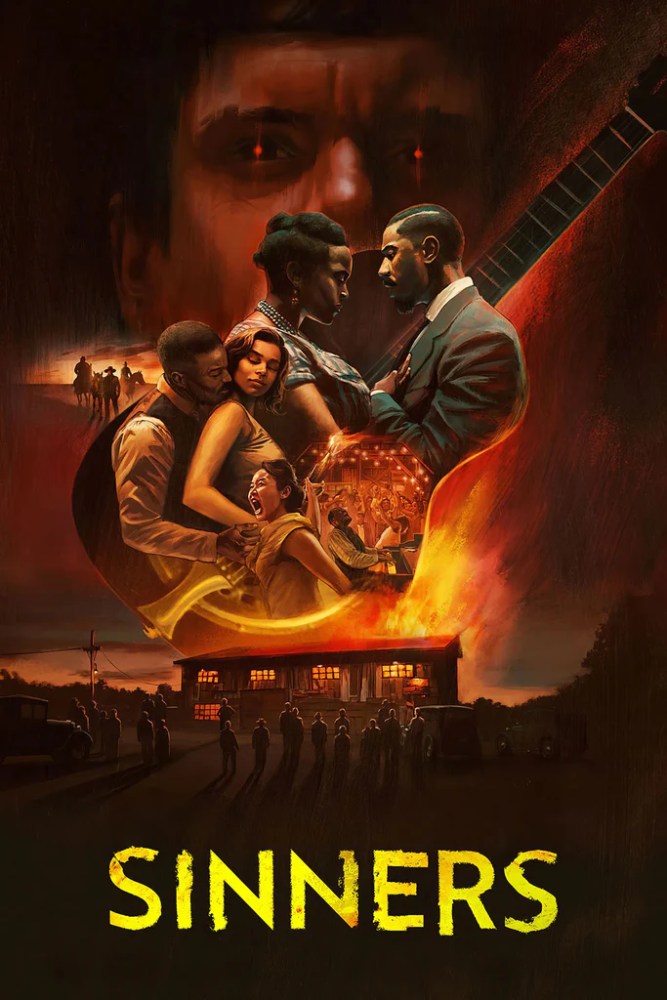

Director: Ryan Coogler
Writer: Ryan Coogler
Cast: Michael B. Jordan, Miles Caton, Hailee Steinfeld, Jack O’Connell, Wunmi Mosaku, Jayme Lawson, Omar Miller, Delroy Lindo, Peter Dreimanis, Lola Kirke, Li Jun Li, Yao, Saul Williams
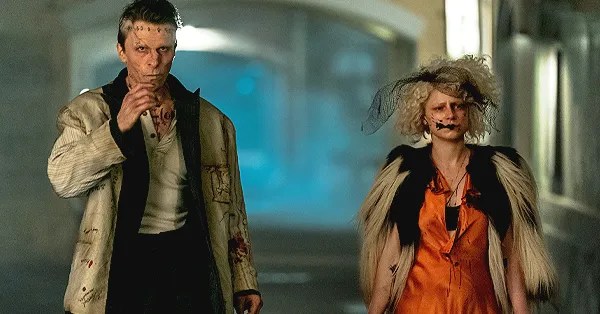
The horror genre wouldn’t be what it is without vampires. From Dracula and Nosferatu to Lestat and Edward Cullen (don’t come for me), we’ve swung around from the bloodthirsty vampire to the sexy vampire and taken on everything in between. These undead creatures come and go in film, and it can be tough to reinvent them or give them a new angle or fresh take. Clearly, Ryan Coogler saw this as a worthy challenge, and thus, Sinners was born. Or rather, risen from the depths of hell. A world away from the likes of Black Panther and Creed, has Coogler managed to make his mark in the horror genre, or is this one which he’ll find himself repenting for?
In 1932 Mississippi, the Jim Crow era, WWI veteran twin brothers Elijah ‘Smoke’ and Elias ‘Stack’ Moore (both played by Michael B. Jordan) return from Chicago after years working for mobsters with some stolen money, which they use to buy an old sawmill from a racist landowner to turn into a juke joint. After recruiting some old friends, including their young cousin Sammie (Caton), Smoke’s estranged girlfriend Annie (Mosaku), and their childhood friend and Stack’s white-passing ex-girlfriend Mary (Steinfeld), their opening night doesn’t quite go to plan when three white strangers roll up to their door, claiming to have money to spend and music to play, but in reality harbouring much darker intentions.
If you watch this movie completely unaware of the premise, it’s likely you would be taken aback by the trajectory the story takes, and were it helmed by any lesser writer/director, it may have left you confused and lost by the end. However, Coogler deftly blends genres and themes to create something unique, shocking and meaningful, the horror of it all being both the overt plot and the subplot when it comes to racism and segregation. With vampires being stereotypically and legendarily white, the historical setting of the southern US in the early twentieth century works perfectly to ingrain themes of colonialism, cultural appropriation and ethnic cleansing. In a lighter context, it also showcases the resilience of Black people, and by extension any culture that has suffered at the hands of colonisers, as well as the importance of intrinsic cultural beliefs and the bonds between friends, families and romantic partners. The film briefly features Native Americans too, and though it was a surprise to not see them make another appearance in the film, perhaps in hindsight it makes sense when this is supposed to encompass specifically Black sentiments and experiences of the era. The film is diverse where it needs to be without losing focus on Black identity.
Coogler clearly has a solid collaborative relationship with his cinematographer Autumn Durald Arkapaw, with whom he also worked with on Black Panther: Wakanda Forever, because the angles and shots they produced were outstanding. From the wide shots of the bright beautiful landscape of Mississippi to the intense darkness of and close ups in the night scenes, everything worked in tandem with the story to impart particular emotions onto audiences. The work done to make Michael B. Jordan appear as two people in many scenes was seamless – many unfamiliar with Jordan have assumed it was indeed two brothers or very similar looking actors playing the roles, proving just how good the VFX were. There is also a particular musical scene that makes for a breathtaking inciting incident, and perhaps the film’s best scene. On top of this, the film builds the horror itself slowly, with creepy peeks here and there until the full reveal. Sometimes the payoff isn’t worth the build-up, but Coogler ensured it was worth every second in his film. There were some scenes in the first act that slowed the pace a little, and at times it was a struggle to understand the era-appropriate accent, but these are minor negatives considering the overall quality of the picture.
Although the VFX did indeed to a stunning job in making Jordan appear as two people, along with clever costuming, his performance also went a long way to assist audiences in telling the difference between Smoke and Stack and following their individual identities. As Smoke he’s a patriarchal figure, and as Stack he’s a reckless younger sibling with a good heart. Caton’s naïve Sammie is our entryway into the Moore family, and Caton’s musical performances and general presence within the film are incredible. Steinfeld embodies Mary well, to the point where it’s difficult to predict what will happen with her, and Mosaku’s Annie, the matriarch to Smoke’s patriarch, is the strength needed when shit hits the fan, her chemistry with Jordan also proving poignant within the film. O’Connell’s performance represents much more than his vampiric character, and as always he puts in an excellent turn as both a horrific creature and an interpretation of wider themes. There are also some excellent supporting performances, particularly from Miller and Lindo, that round out the ensemble.
After this critical and commercial hit, there is hope that Coogler might be able to create something of a similar breed in the future. He has shown great understanding of horror and how to blend it with real themes, and so it would be rude to not anticipate his next project, should he go down this route again, perhaps in a similar vein to his contemporary Jordan Peele. In any case, Sinners might just be the horror of the year, and we’re barely half-way through. One may even call Sinners a Peaky-Blinders-meets-From-Dusk-Till-Dawn-via-Stephen-King-and-the-Jim-Crow-era masterpiece, and that’s nothing to be sniffed at.




 Dawn of the Tapes
Leave a comment