

#–A–B–C–D–E–F-G-H–I-J-K–L–M–N-O-P-Q-R–S–T–U-V–W-X-Y-Z
B
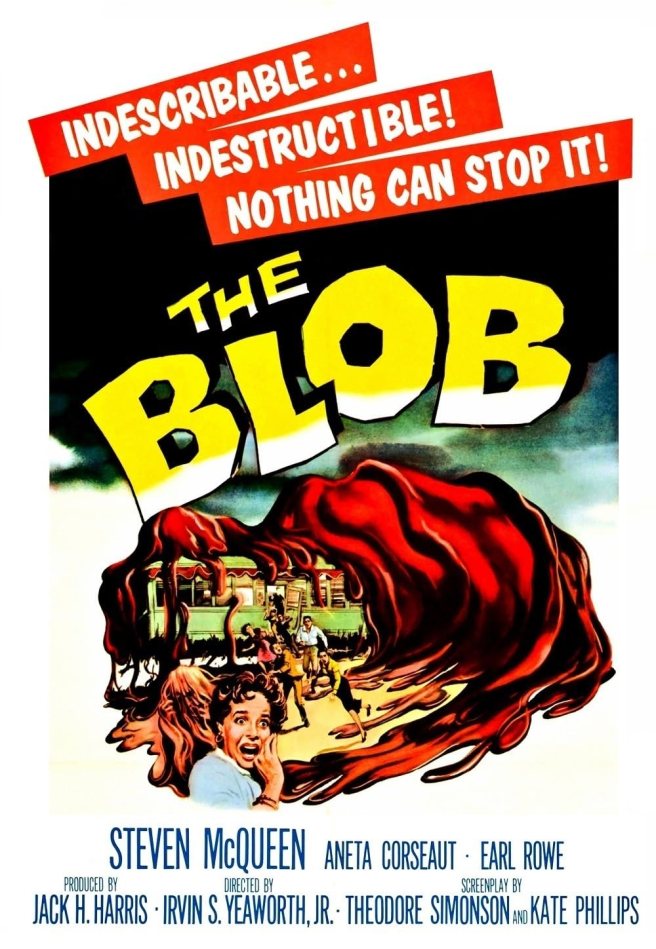
The Blob
Released: 1958
Director: Irvin Yeaworth
Synopsis: In Steve McQueen’s leading role debut, a small gelatinous blob comes down to Earth and slowly begins to attack people, appearing to consume them. As it does, it dramatically grows in size. Two teenagers attempt to warn people, but struggle to get anyone to believe them before it’s too late.
Verdict: As a kid, this film was terrifying. As an adult, it still holds up pretty well, with great performances and quiet moments of suspense balanced well with shock and horror. Most of the terror happens in the final 20 minutes, but taking its time isn’t necessarily a bad thing. 4/5

Bride of Frankenstein
Released: 1935
Director: James Whale
Synopsis: Henry Frankenstein (Colin Clive), found alive after the events of Frankenstein, has grown wary in his quest to create life and thus abandons his experiments. Soon, he is convinced by his old mentor to begin again, and after further threats from the Monster (Boris Karloff), his original creation who also survived, he complies, and works on creating a mate for the Monster.
Verdict: This sequel is, surprisingly, decent. It’s perhaps a little less horrific and even less to do with the Bride herself, and focuses more on the Monster’s story and his evolving intelligence, as well as the continuing quest of men to play God. One particular scene with Henry’s mentor Doctor Pretorius and his little creations is a technological marvel for the time, and overall many modern filmmakers could learn a lesson or two from this solid sequel. 4/5
C

The Cabinet of Dr. Caligari (German: Das Cabinet des Dr. Caligari)
Released: 1920
Director: Robert Wiene
Synopsis: This early work of German expressionism follows the story of a warped hypnotist who brainwashes a man that suffers with a sleepwalking condition in order to commit murders.
Verdict: A fantastic and enduring film that proves we don’t need modern technology to create a classic. With amazing set designs and costumes, it has had a clear surrealist influence on cinema as a whole in the last 100 years. It is hard to find an original amongst all the dubbed or soundtracked versions, with some being far more jarring and reprehensible than others, but as it was originally a silent film, it is perfectly easy to watch with the sound off. 4/5

Creature From the Black Lagoon
Released: 1954
Director: Jack Arnold
Synopsis: On an expedition to the Amazon, scientists come across a violent amphibious humanoid creature – dubbed “Gill-man” – in the waters. As they try to make their way back home, the creature becomes more violent and seeks to abduct one of them.
Verdict: Arnold does a fantastic job of keeping things interesting with the various settings and use of light to enhance the picture (possibly in part due to the fact it was originally released in 3D, which at the time it was just falling out of popularity in the 50s). The costuming, while a little dated now, still works to make the creature a figure of terror, particularly with brief shots of its hand creeping out of the water or through a window. A classic that is absolutely worth your time. 4/5
D
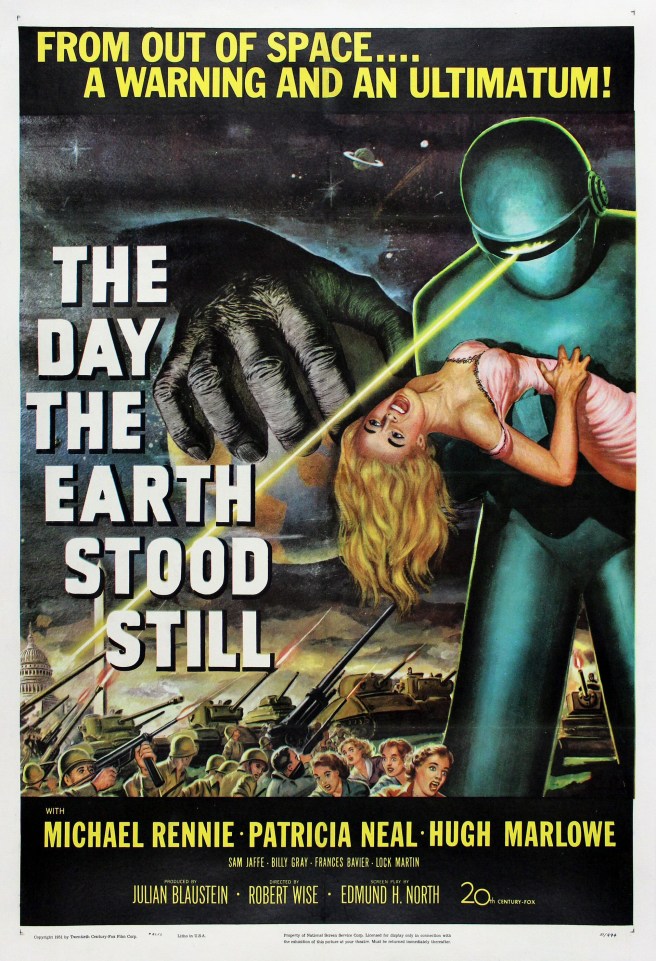
The Day the Earth Stood Still
Released: 1951
Director: Robert Wise
Synopsis: During the Cold War, at the time of the nuclear arms race, a humanoid alien arrives on Earth to warn humans of their impending doom if they don’t come to peaceful terms, as they will be deemed a threat to other planets in the future.
Verdict: A timeless film, the message of The Day the Earth Stood Still sadly still resonates today. Its horror stems from the threat of humans exterminating themselves rather than the threat of extinction from extraterrestrials. The alien Klaatu delivers his message with an balance of matter-of-fact and haste, mostly thanks to Michael Rennie’s performance. Klaatu’s interactions with the boy Bobby also lends the film some innocence. Based on the short story Farewell to the Master by Harry Bates, the film deviates a lot to add depth and resonance. 5/5

Dracula
Released: 1931
Director: Tod Browning
Synopsis: When lawyer Renfield travels off to Transylvania to meet Count Dracula, he succumbs to the Count’s will and assists him in moving to England, where Dracula preys on innocent victims.
Verdict: These days this style of film won’t be for everyone, but anyone who can appreciate the classic art style and original performance of Bela Lugosi will get much enjoyment from it. The black and white cinematography, including the calculated lighting effects, lends itself to an atmospheric creepshow, and the skulking actions and intense accent of Lugosi indeed make for a classic horror romp. 4/5
E
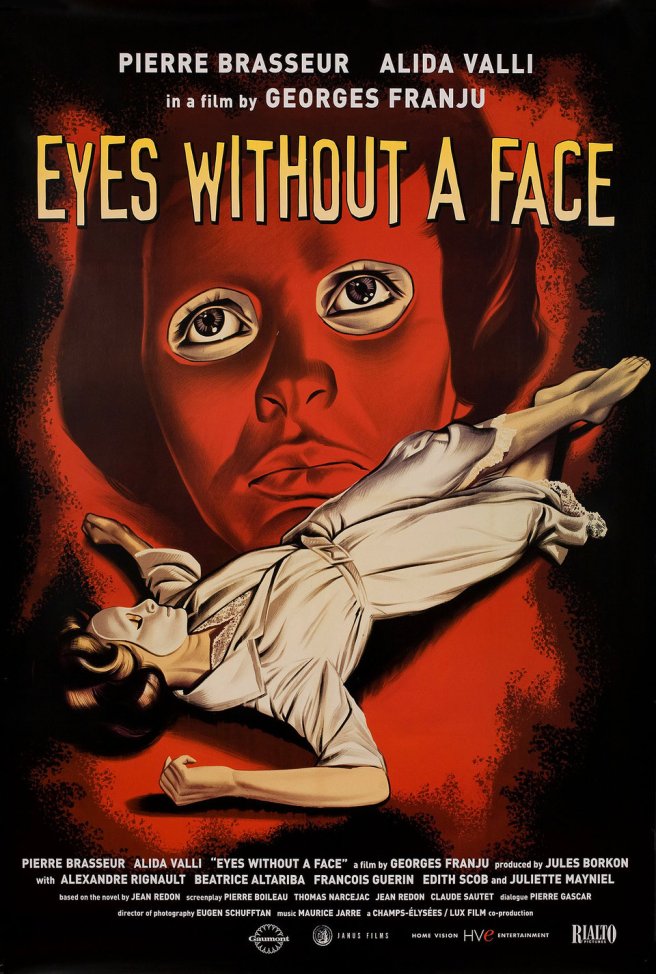
Eyes Without a Face (French: Les Yeux sans visage, US: The Horror Chamber of Dr. Faustus)
Released: 1960
Director: Georges Franju, based on the novel by Jean Redon
Synopsis: Dr. Génessier (Pierre Brasseur), a plastic surgeon, finds his next patient to be his own daughter after she’s involved in a car accident that leaves her face severly disfigured. He lures women to his home in order to try multiple times to conduct a face transplant on his daughter.
Verdict: Coming soon
F

The Fly
Released: 1958
Director: Kurt Neumann
Synopsis: A newly widowed woman, Hélène (Patricia Owens), makes a phone call to tell a family friend that she has just murdered her husband. As the police investigate and interview the woman, they come to find that her husband was a scientist in the process of inventing a transporter, and when he tried to experiment with it, something went terribly wrong.
Verdict: Who knew a 1950s film about a man turning into a fly could be so good? The story is paced very well, the build-up done nicely to culiminate in a shocking and twisted end, and the performances are very good, played as seriously as Michael Caine with Muppets. 4/5
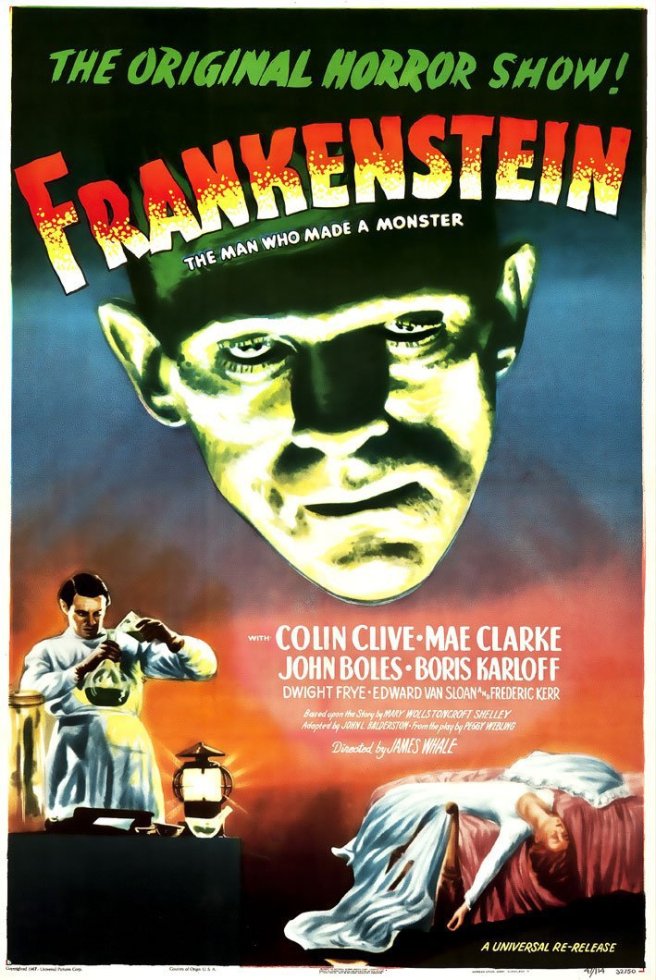
Frankenstein
Released: 1931
Director: James Whale
Synopsis: Dr. Frankenstein decides to play god and reanimate a body thrown together with multiple body parts from different corpses in order to create the Monster. Without someone to guide him, the misunderstood Monster terrorises the locals until they set out to hunt him down.
Verdict: A horror classic that stands the test of time, if only for its brutal nature and dark tones (in both its visuals and its story) and the famous make-up on Boris Karloff. Staying more or less true to Mary Shelley’s famous novel, there’s a lot to be terrified of in this movie, and a lot to enjoy in its 1930s style. 4/5

Freaks
Released: 1932
Director: Tod Browning
Synopsis: A trapeze artist named Cleopatra (Olga Baclanova) joins a carnival sideshow, in which she seduces a fellow performer purely to get at his inheritance, getting others involved in her scheming. Amongst other relationships going on within the company of the sideshow, many of them become suspicious of Cleopatra and thus take matters into their own hands.
Verdict: While this film was probably quite discerning for its time (to put it lightly), it doesn’t hold up today due to its subject matter of putting people who are different on show as ‘freaks’. As a film it succeeds in having a clear story, but one can’t help but feel this film was purely for exploitation. Worth watching purely for understanding how times have changed dramatically, and for appreciating the performances by all the actors.
I
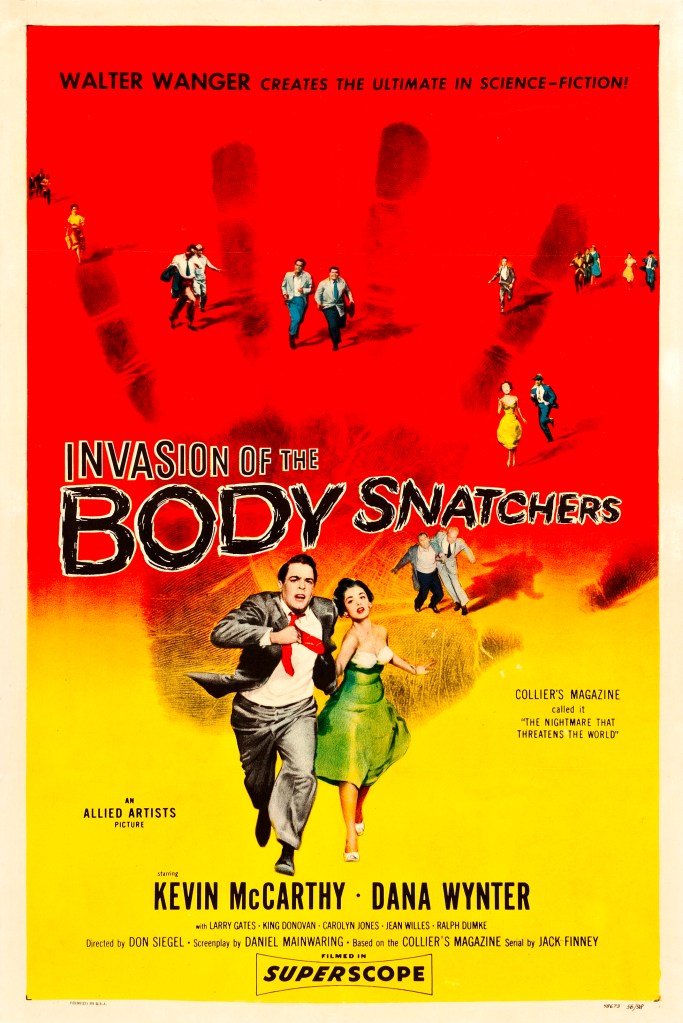
Invasion of the Body Snatchers
Released: 1956
Director: Don Siegel
Synopsis: When strange alien spores begin to identically replicate and kill humans, Dr. Bennell (Kevin McCarthy) attempts to find a way to stop and eradicate the spores and their pods with the help of his girlfriend, Becky (Dana Wynter).
Verdict: As a post-WWII film, this one certainly delves into themes of colonisation and indoctrination, of sorts. On a less serious note, it continues to work very well as a terrifying horror that feels more and more stifling as the ‘body snatchers’ close in on all the people of the town. The story and dialogue still hold up and the performances have endured the test of time, too. 4/5
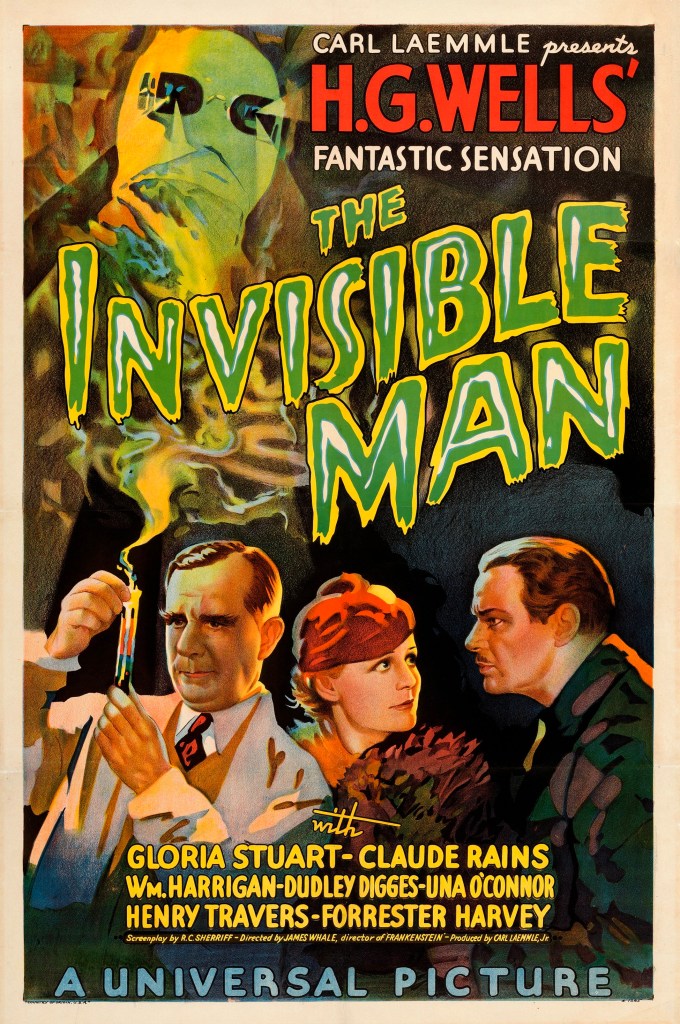
The Invisible Man
Released: 1933
Director: James Whale
Synopsis: After a secret experiment turns him invisible, Dr. Jack Griffin (Claude Rains) seeks refuge in a room he rents in a village. Wearing only bandages and dark glasses, he seeks out his colleague, who discovers how insane Jack has become, informing him of Jack’s desire to commit heinous crimes.
Verdict: Quite an entertaining film for the time, The Invisible Man blends horror and comedy quite deftly. Jack’s actions are, at times, hilarious, but his ultimate goal through it all is a sobering reminder of how frightening he really is. Great performances and a solid storyline that doesn’t let up. 4/5
M

The Mummy
Released: 1932
Director: Karl Freund
Synopsis: A dangerous mummified priest is accidentally brought back to life by a group of archaeologists, and he proceeds to hide himself amongst the Egyptian people while he searches for and attempts to ressurect his dead love.
Verdict: Before we had Arnold Vosloo and Brendan Fraser, we had Lon Chaney Jr. and David Manners. Admittedly this original that kicked off many remakes isn’t quite as exciting or adventurous, but it does have its moments. Chaney is excellent in an almost dual role, and makes for a creepy Imhotep. 3/5
N
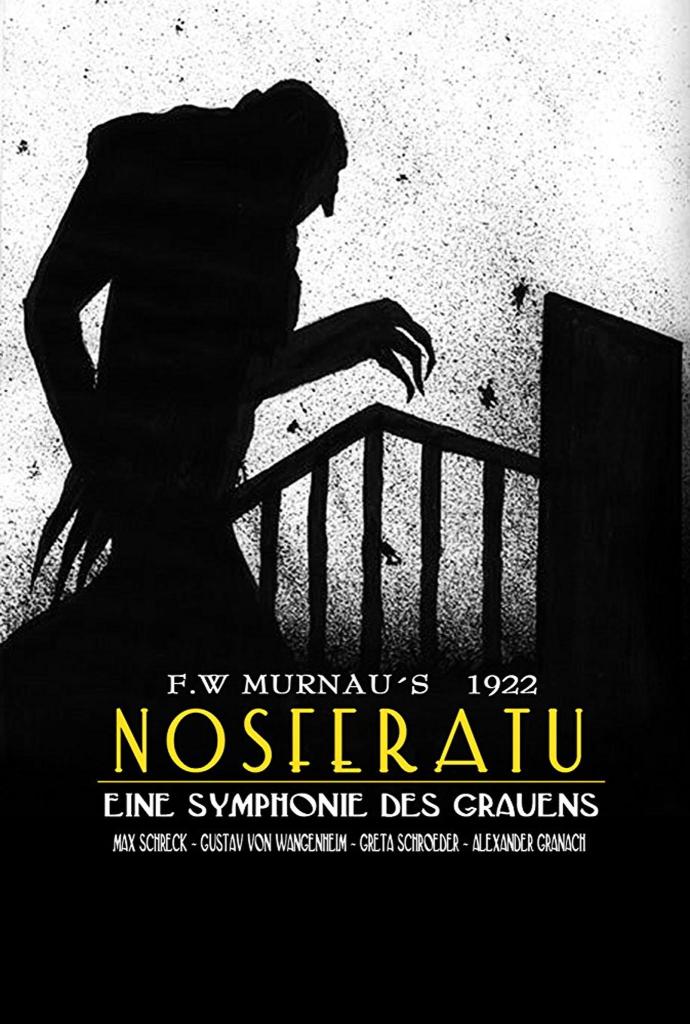
Nosferatu: A Symphony of Horror (German: Nosferatu – Eine Symphonie des Grauens)
Released: 1922
Director: F.W. Murnau
Synopsis: Based (unofficially) on Dracula, Nosferatu features a vampire by the name of Orlok (Max Schreck) who stalks the wife of his estate agent, causing the outbreak of a strange plague in the town.
Verdict: A terrific showcase of German expressionism that, much like The Cabinet of Dr. Caligari, proves that modern technology is not needed to create a masterpiece. From the set and costume designs to the lighting and the performances, particularly from Schreck and his gangly vampire, Nosferatu stands strong against any Dracula production. 4/5
P
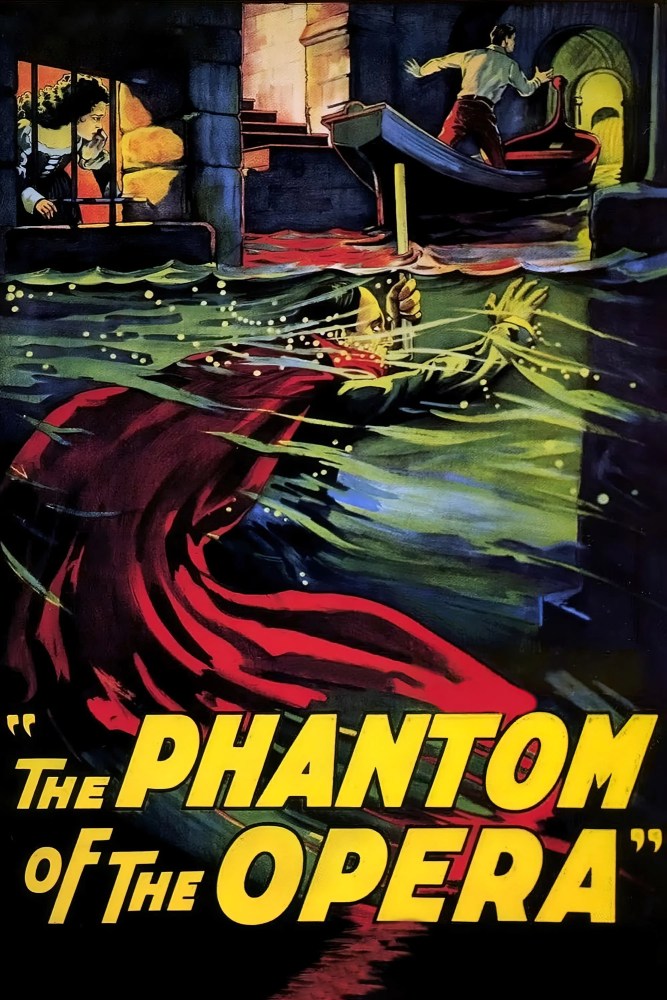
The Phantom of the Opera
Released: 1925
Director: Rupert Julian
Synopsis: A deformed man stalks a young opera singer and seeks to make to her a star at any cost.
Verdict: Coming soon

Phantom of the Opera
Released: 1943
Director: Arthur Lubin
Synopsis: After he is dismissed from the orchestra at the Paris Opera House, violinist Erique Claudin (Claude Rains) attempts to sell a composition to make some money. When he is refused, he comes to find that the potential buyer may be stealing his work and ensuing violence leaves him disfigured, turning him into a violent Phantom.
Verdict: As adaptations of Phantom go, this one treads fairly lightly. Despite being labelled as a horror, there’s not a lot of actual horror to it, but it runs well as a story, with good characters, scenes and performances. The transformation of Erique is ghastly and surely would have shicked a 1940s audience, but it doesn’t really work so well for a modern audience. 3/5
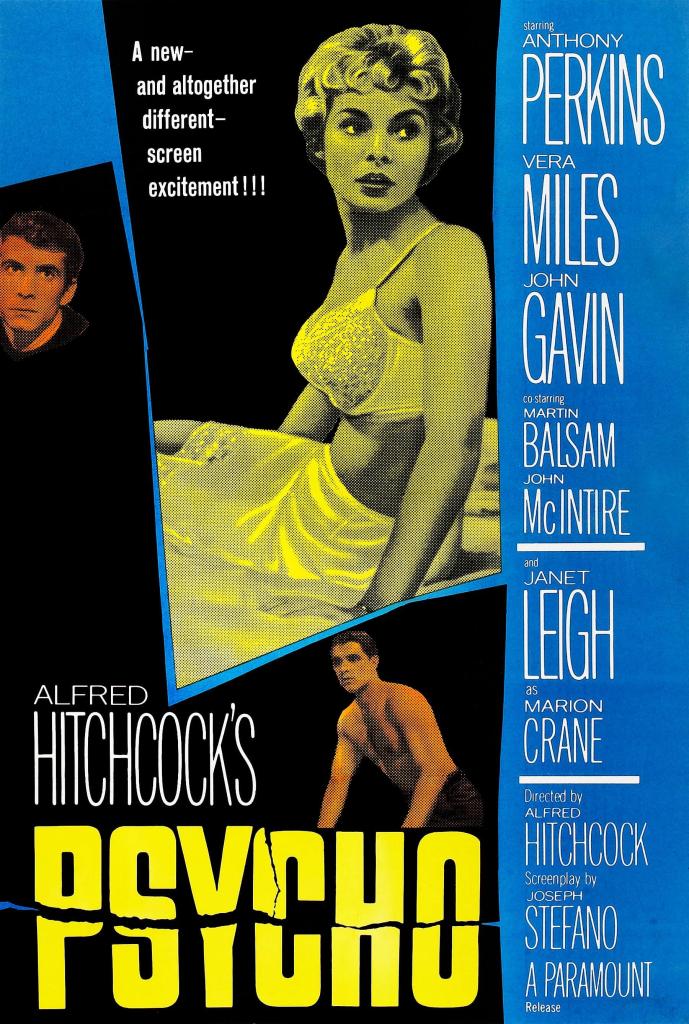
Psycho
Released: 1960
Director: Alfred Hitchcock
Synopsis: When Marion (Janet Leigh), an embezzeler, lays low at a motel, she encounters the strange owner, Norman Bates (Anthony Perkins). Marion’s partner and sister grow worried when they don’t hear from her, and so they hire an investigator to trace her.
Verdict: They don’t come much more classic in the horror genre than Hitchcock’s Psycho, and it’s certainly an enduring classic for a reason. With it’s careful build-up, well-sculpted characters and multi-layered story (and not to mention its legendary score), it’s an absolute must for any horror fans, particularly those studying the genre. 4/5
T

Them!
Released: 1954
Director: Gordan Douglas
Synopsis: Giant mutated ants, possibly from Earth, possibly extraterrestrial, become a threat to the United States when two ant queens are discovered to be establishing colonies to produce their own killer ant army on Earth.
Verdict: If you’re looking for a film to educate you on ants, this is the one for you. If you’re looking for something with a little more terror, this may not be. It starts off well, but tapers off in the second act to dialogue-heavy scenes, opting for constant verbal exposition over action and drama. It’s a good study in classic horror, but also has a few lessons in what not to do to retain the attention of your audience. 3/5
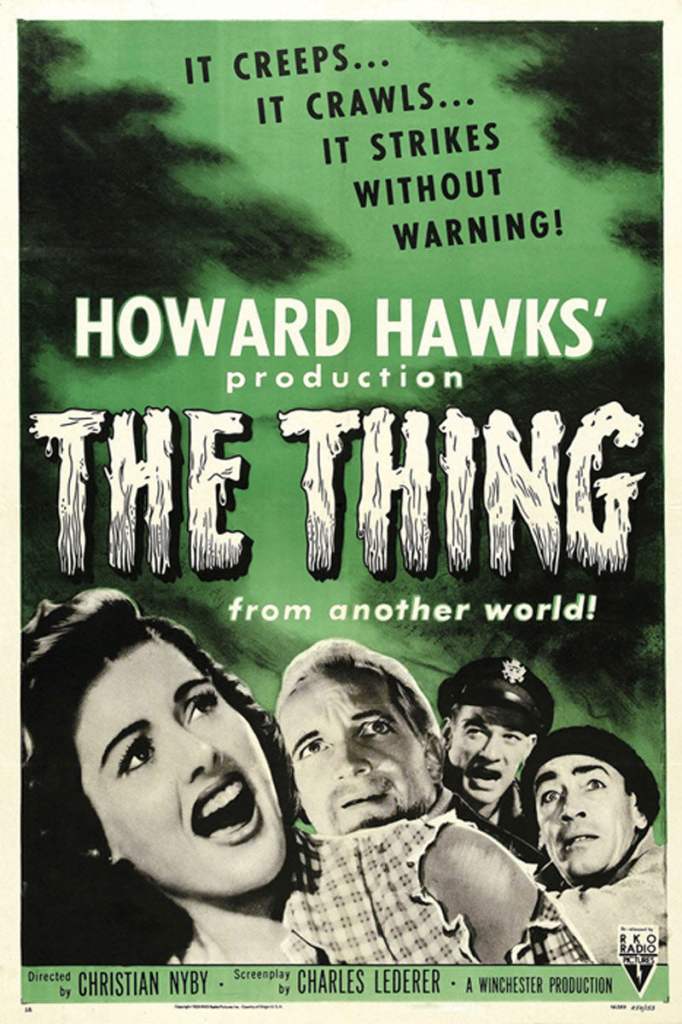
The Thing From Another World!
Released: 1951
Director: Charles Nyby
Synopsis: In the Arctic, a spaceship is discovered by US Air Force crew members and scientists, along with a frozen humanoid body. After taking it back to their base, the body is accidentally thawed out and turns out to still be alive, and it begins an attack on the crew and scientists.
Verdict: If you watch John Carpenter’s The Thing before this iteration, it can be hard to get enjoyment from the ’51 film due to its dialogue-heavy, more psychological style. While there is the presence of a creature, it doesn’t have quite as high a scare-factor as the body horror-style of the ’82 film. It does however have a strong group of performers that make the story somewhat interesting. 3/5
V

Village of the Damned
Released: 1960
Director: Wolf Rilla
Synopsis: In a small, unassuming village in England, all of the villagers suddenly fall unconscious. When they come to, all the women of child-bearing age find that they are pregnant. When the children are born and begin to grow, they all have similar strange features, including a supernatural connection to one another.
Verdict: A really good premise that was perhaps wasted on the dialogue-heavy style of classic cinema, there’s a lot to be intrigued by and some good performances from the young actors. Perhaps this film may have been more frightening for its time, but it doesn’t really pass the endurance test more audiences. 3/5
W
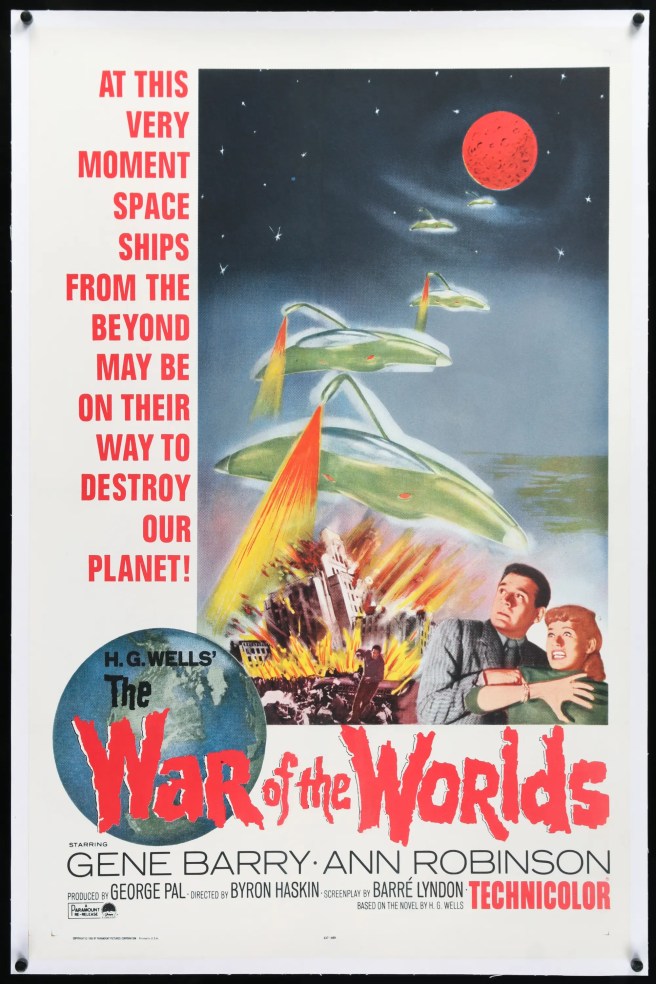
The War of the Worlds
Released: 1953
Director: Byron Haskin
Synopsis: When hostile aliens come to Earth, Dr. Clayton Forrester (Gene Barry) must figure out their weakness, as well as stay alive, before they destroy all of humanity.
Verdict: Although this movie deviates from the book to modernise it (for the 1950s), it still retains much of its dialogue-heavy scenes, thus making it a little bit of a slog now and then. However, there’s still plenty to be frightened by in this classic, particularly scenes involving the aliens in any capacity. It might not be the most terrifying thing to 21st century audiences, but for fans of classic cinema, this one is a must-see. 3/5

The Wolf Man
Released: 1941
Director: George Waggner
Synopsis: On his return to his family home in Wales after the death of his brother, Larry (Lon Chaney Jr.) falls for an already engaged woman. When they take a walk one night, Larry is bitten by a werewolf, and he begins to experience some deadly changes.
Verdict: Unlike some of its contemporaries, The Wolf Man isn’t bloated with unecessary dialogue or stagnant scenes. The story is strong and well-paced, the performances are engaging, and the sets are quaintly peaceful in the daytime and gothically dark in the nighttime. Also, with a run time of just 70 minutes, it’s good for those looking for something that won’t be too attention-demanding. 4/5
 Dawn of the Tapes