


Director: Scott Derrickson
Writers: Scott Derrickson, C. Robert Cargill, based on the short story The Black Phone by Joe Hill
Cast: Mason Thames, Madeleine McGraw, Ethan Hawke, Jeremy Davies, Miguel Mora, Demián Bichir, Arianna Rivas
I’ve said it before and I’ll say it again and again: sequels generally suck. Unless a writer has a genuinely sound reason for bringing back characters, continuing a story or spinning off from one, it is more than likely it will bomb and do a massive disservice to the previous film. I believe this is none more true than in the horror genre. Once filmmakers (*cough*STUDIOS*cough*) have bagged a hit or, at least, a moneymaker, they’re almost guaranteed to do a follow-up that rarely captures that same lightning-in-a-bottle. 2021’s The Black Phone, based on Joe Hill’s short story, is a fairly solid film with supernatural elements surrounding a child’s kidnapping that performed extremely well at the box office against a relatively modest budget. Thus, here we are with a sequel based on an idea of Hill’s that intrigued director Scott Derrickson. Is this one of those rare occasions where a sequel rises to the challenge of meeting the quality and success of its predecessor, maybe even surpassing it, or is it another to add to the Cemetery of Sequels™?
***WARNING: This review includes spoilers for previous film The Black Phone.
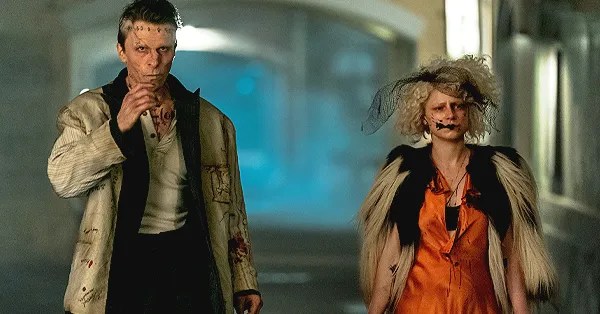
After the traumatic experience of being kidnapped and killing his captor known as the Grabber (Hawke) four years prior, Finn (Thames) finds himself increasingly pushing it all to the back of his mind and trying to numb himself. His sister Gwen (McGraw) continues to have visions in the form of dreams, or rather nightmares. These dreams eventually lead Finn, Gwen and their friend Ernesto (Mora) to a Christian youth camp in the mountains where their mother once worked when she was young. It is there that they discover their deeper connection to the supernatural, as well as previous murders and that Finn’s captor isn’t entirely gone; he is quite literally hell-bent on taking Finn down to the depths with him.
The first film was, as mentioned, pretty decent, though I was left wanting more from the supernatural side and perhaps more depth concerning some characters. This is where Black Phone 2 outdoes the first. The film delves deeper into Finn’s and Gwen’s states of mind as well as how their family history affects their present, using more of the same supernatural elements from the first film but in a far more overt way. The world of The Black Phone is widened beyond Finn and Gwen and the town in which they live, opening it up to the possibility of more people, especially children, being tormented by villains like the Grabber as well as whatever lies ‘beyond the veil’ (not to mention its link to a story within the V/H/S universe). The story itself starts off strong in this sequel and picks up well after the previous events, though the plot does get looser as it moves on – it manages to tie it all together well enough by the end, however the run time could probably have been shortened to something closer to the first film’s 103 minutes with some harsher editing, such as less scenes depicting the Grabber tormenting characters – less would have been more in that regard.
Having said that, the editing itself was excellent and superbly blended Derrickson’s direction and Pär M. Ekberg’s cinematography. The use of 8mm film (super 8) to distinguish reality with the nightmare/supernatural world worked very well, particularly with the backdrop of the sound of a projector, just as it did in another of Derrickson’s horror films, Sinister, and made the new world of the Grabber far creepier – imagine if Freddy Krueger of Elm Street found himself in the Upside Down from Stranger Things. Additionally, Atticus Derrickson’s (son of the director) score was phenomenal and really set the tone for the whole film, a tone that went darker than the first film, though I didn’t think that could be possible.
Mason Thames and Madeleine McGraw were fantastic in the first film, particularly McGraw and her ability to portray such raw emotion from one so young, and both have grown into stronger actors in the time since. Finn is still figuring out how to deal with his trauma, and Thames deftly moves around Finn’s feelings with a great understanding of his reluctance to dive head-first back into the world that traumatised him. McGraw is once again thrown into the deep end, displaying a range of emotions, though fear and courage overtake the anger and sadness she portrayed in the previous film, and although her comedic potty mouth has lessened a little, she is still the ballsy girl we enjoyed, though now she is a ballsy young woman. Although we see little to nothing of Ethan Hawke’s face again in this film, his presence and sinister (heh) vocals are everything we need to understand how much more threatening the Grabber has become, now he is a supernatural entity with darker power behind him. Jeremy Davies returns as Finn and Gwen’s reformed father Terrence, who has changed his abusive, alcoholic ways after nearly losing Finn, and while Davies puts in a good performance that shows the character has changed, Terrence doesn’t really appear to be working to make amends with his children – there’s no discussion of how or why he has changed and whether Finn and Gwen have made moves to forgive him. Without all that, he may as well have not been as involved in this film as he is. He does show through his actions that he cares, but to the point where he allows Finn and Gwen to walk all over him. We could imagine that these discussions have been had, but for the sake of the audience not having been privy to those discussions, a scene with the three would have been welcome. Miguel Mora played Robin, a victim of the Grabber and friend of Finn’s, in the first film and returns here as Robin’s brother Ernesto. He works well as a great support to the two leads, particularly Gwen. Demián Bichir as the camp’s owner Armando is a good link for Finn and Gwen to their mother’s past at the camp, and Arianna Rivas as Armando’s niece Mustang is another strong female figure but she kind of feels like she was added as an attempt to balance the male to female ratio with no real necessity for her presence.
I can confidently say that Black Phone 2 is one of those rare occurrences where the sequel does match the quality of its predecessor, though in this case, for me, it goes beyond what The Black Phone did by delving deeper into the supernatural and exploring more of what made the first film horrific in the first place. There is an argument to be made that a third instalment could easily come to fruition, though how the Grabber would be a part of that is unclear, however a spin-off surrounding the use of old phones by spirits stuck in some kind of limbo could be a good angle, not to mention on-brand with the title of the series. A television show could work, with someone working to free these spirits from their earthly torments. Either way, if there is to be a third, I would hope it would be another solid idea from the epically creative mind of Joe Hill, son of another epically creative in the form of one Stephen King. I guess great (related) horror minds think alike.




 Dawn of the Tapes
Leave a comment